Is MetaMask Safe and Legit? Expert Review 2026
Key takeaways
MetaMask is a 100% legitimate, non-custodial wallet developed by ConsenSys.
As of 2026, MetaMask is widely considered the industry benchmark for Web3 wallets, following its Blockaid-powered threat detection rollout.
Transaction Shield offers optional insurance coverage up to $10,000/month
Is MetaMask safe in 2026? With millions of users, ongoing upgrades, and increasing regulatory scrutiny, MetaMask remains one of the most widely used crypto wallets today.
In this MetaMask crypto wallet review 2026, we break down its security model, risks, and real-world safety. This MetaMask security review covers everything from self-custody mechanics to phishing protection and AI-powered transaction simulation.
|
MetaMask features |
Description |
|
Custody |
Self-custody |
|
Private key storage |
Local, encrypted |
|
Hardware wallet support |
Yes |
|
Open-source |
Yes |
|
Phishing protection |
Yes (transactions simulation |
Is MetaMask safe?
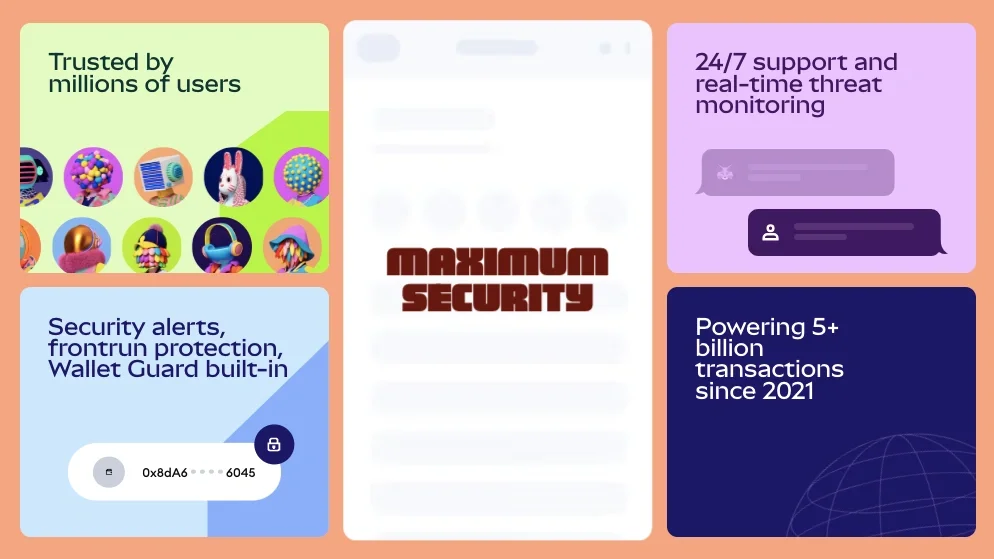
MetaMask is one of the safest cryptocurrency wallets available in 2026. The platform combines robust self-custody mechanics with cutting-edge AI-powered security features. MetaMask is owned and developed by ConsenSys, a blockchain technology company founded by Ethereum co-founder Joseph Lubin in 2014.
MetaMask security review in 2026
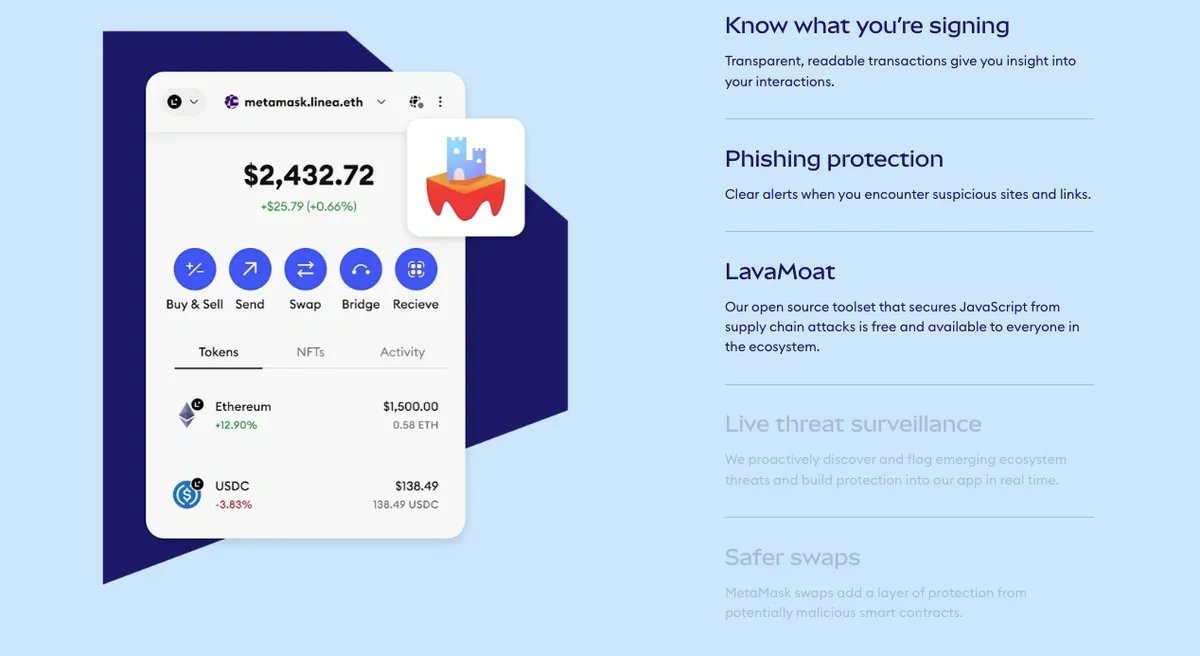
In this MetaMask security review, the wallet’s safety comes from a layered approach rather than a single feature. From self-custody key management to transaction simulation, supply chain protection, and open-source audits, MetaMask combines multiple security mechanisms to reduce risk at different levels.
Here’s how each layer works in practice:
1. Self-custody mechanics
If you are curious, is MetaMask non-custodial wallet? Yes, it's a non-custodial software wallet, meaning you control your private keys. These keys are encrypted locally on your device, not stored on MetaMask or ConsenSys servers.
This architecture removes a major risk seen with centralized exchanges: platform insolvency. If an exchange fails, users can lose access to their funds. With MetaMask, ownership stays with you.
Self-custody also means responsibility. If you lose your recovery phrase, no company can restore access.
2. Blockaid Integration (announced and active rollout)
In October 2023, MetaMask partnered with Blockaid to integrate privacy-preserving security alerts. In 2024–2025, MetaMask announced and began rolling out Blockaid-powered transaction security. This system simulates transactions before approval to detect malicious behavior, such as:
-
Wallet drainers
-
Hidden approvals
-
Phishing contracts
In 2026, this feature is active by default on many networks, with broader coverage still expanding.
Important: This reduces risk, but does not eliminate user responsibility.
3. LavaMoat
LavaMoat is an open-source toolset designed to secure JavaScript applications against potential supply chain attacks. It provides a crucial layer of defense by confining code execution and mitigating risks associated with third-party dependencies.
4. Open source and independent audits
MetaMask is open-source, allowing independent researchers to review its code. Recent audits from firms such as Least Authority and OtterSec focused on key encryption handling, transaction simulation logic, and Snap permission boundaries. No critical unresolved vulnerabilities were publicly disclosed at the time of writing.
What is MetaMask?
MetaMask is a cryptocurrency wallet that acts as your bridge between regular web browsers and the decentralized world of blockchain applications. Think of it as your digital passport to Web3.
Available as both a browser extension and mobile app, MetaMask allows you to hold cryptocurrency, trade and interact with decentralized applications (dApps). You can manage your digital assets across multiple blockchain networks. To track your portfolio and calculate taxes, you can follow our guide on how to connect MetaMask to Blockstats.
What are the benefits of using MetaMask in 2026?
MetaMask offers several key functionalities:
1. Web3 interaction:
MetaMask serves as a bridge to decentralized applications (dApps). When accessing dApps, such as Uniswap, you can connect your account. This allows you to approve or decline transactions within the application.
2. Self-custody
A fundamental principle in crypto is, "Not your keys, not your crypto." This highlights the risk of holding assets on centralized exchanges, where you lack true ownership. As a self-custody wallet, MetaMask provides you with control over your private keys, ensuring that your cryptocurrency remains safe even if a platform fails.
3. Financial overview:
MetaMask functions as a consolidated ledger for your digital assets. It displays your current cryptocurrency balances and provides a history of all your transactions, acting as a mini-statement that can be useful for tracking taxable income.
4. Universal chain support
MetaMask is best known for Ethereum and EVM-compatible chains like Arbitrum, Optimism, Polygon, and Avalanche.
Support for Solana and Bitcoin has been announced and partially rolled out, depending on region and wallet version. Users should verify availability directly within their app.
5. MetaMask Snaps
Snaps are modular extensions that allow MetaMask to support additional blockchains, advanced security checks and custom transaction logic. This modular approach reduces bloat while allowing power users to extend functionality safely.
6. Improved privacy controls
MetaMask now allows more granular control over RPC providers. This helps reduce IP-level tracking when interacting with blockchains.
While not perfect anonymity, it represents a meaningful improvement over earlier designs.
Read next: How to calculate crypto taxes
What are the Metamask security risks in 2026?
Understanding MetaMask security risks in 2026 is critical, as most vulnerabilities are user-driven rather than protocol-level flaws.
Like any service, MetaMask has potential risks, but MetaMask’s risks are mostly user-facing, not protocol-level
-
Loss of funds: MetaMask is a hot wallet, which means your private keys live on an internet-connected device. This convenience comes with inherent risk. Losing your private key or recovery phrases means losing access to your funds, so keep them safe.
-
No customer support: Metamask is an open source crypto wallet which support is mainly community-driven. You will get no dedicated support team when you need help.
-
Address poisoning attacks: A growing trend involves sending zero-value transactions from lookalike addresses to trick users into copying the wrong recipient later. Fake sites or dApps can contain malware that drains your wallet. Always verify the official website before transacting and consider anti-malware software.
-
Third-party dApps: MetaMask enables interaction with decentralized applications (dApps). Like any cryptocurrency wallet, vigilance is key. Always remember the risk of malicious dApps that could potentially empty your wallet.
-
Phishing attacks: Scammers may try to get your private key via email or fake websites. Remember, MetaMask will never ask for your private key or password.
Read next: Best way to organize crypto transactions
For non-traders, storing keys offline is safer. MetaMask is compatible with hardware wallets like Ledger and Trezor.
How do I secure my MetaMask wallet: Security best practices
These MetaMask security best practices in 2026 will reduce your risk exposure to scams and hacks. Follow the tips to keep your MetaMask wallet secure:
-
Do not click on suspicious links: Be extremely cautious and refrain from clicking suspicious links. Cybercriminals often use phishing tactics to compromise cryptocurrency wallets.
-
Use a unique and strong password: To minimize the risk of hacking, ensure the password for your MetaMask wallet is strong and not reused on any other accounts.
-
Use a hardware wallet: If you hold meaningful value, connect MetaMask to a Ledger or Trezor. Your private keys stay offline, even when approving transactions.
-
Enable transaction shield: Where available, enable MetaMask’s Transaction Shield or equivalent protections. Coverage terms vary by region and wallet version.
-
Revoke old permissions: Over time, dApps accumulate spending permissions. Use MetaMask’s native revoke tools or trusted explorers to remove unnecessary approvals.
-
Protect social login access: For users using Apple or Google-based key sharding, secure your primary account with, 2FA and recovery key backups
Read next: Best way to track crypto transactions
What are the best MetaMask alternatives?
Here are several well-regarded non-custodial wallet alternatives to MetaMask. It is important to remember that these are also "hot wallets," meaning they carry similar security risks.
Trustworthy Alternatives to MetaMask:
Trust Wallet:
As one of the largest wallets alongside MetaMask, Trust Wallet boasts over 100 million global users. Owned by Binance, it supports more than 100 blockchains. The wallet emphasizes security through claimed regular audits to find and fix vulnerabilities. It even offers biometric authentication, similar to a smartphone.
Base App (formerly Coinbase Wallet):
A self-custody wallet created by the Coinbase exchange. A key differentiator from MetaMask is its support for non-EVM blockchains, including Solana, Dogecoin, and Bitcoin.
Exodus:
Known for its ease of use, Exodus is an excellent non-custodial choice for those new to the cryptocurrency space. It provides multi-chain support and compatibility with hardware wallets like Ledger and Trezor for enhanced security.
Rabby:
This is an emerging cryptocurrency wallet known for its proactive security features. Rabby alerts users with warnings when they attempt to interact with known phishing websites.
Is MetaMask legal to use?
It’s legal to use Metamask, but the legality often hinges on how a user interacts with it, particularly concerning KYC/AML and tax laws in their specific jurisdiction.
-
MiCA (EU – July 2026): Under the EU’s MiCA framework, MetaMask qualifies as a non-custodial software provider, not a financial intermediary. This allows compliance without requiring custody or user fund control.
-
EU travel rule: Some exchanges may request proof of wallet ownership for transfers. MetaMask provides signing tools to confirm ownership without revealing private keys.
-
Global standing: MetaMask is legal to use in the US, UK, EU, and most major Asian markets. Restrictions typically apply at the exchange level, not the wallet itself.
Is MetaMask legal in the US?
Yes, it’s legal to use a MetaMask wallet in the US currently. MetaMask itself is a software wallet and does not hold custody of funds, which generally places it outside the direct scope of some financial regulations.
Regulatory pressure is growing on cryptocurrency exchanges and non-custodial wallets to eventually collect customer data.
Read next: How to calculate crypto taxes in the US
Verdict: Is MetaMask trustworthy in 2026?
In this MetaMask review, the wallet remains one of the most trustworthy and safest non-custodial options available.
However, its safety depends heavily on user behavior. If you follow best practices, MetaMask is highly secure. If not, risks like phishing and malicious dApps can still lead to losses.
How Blockstats supports MetaMask wallet?
While MetaMask doesn't generate tax reports directly, you can easily create them using a cryptocurrency tax calculator like Blockstats.
The process is easy. Add your public address to Blockstats, and you can import your transaction data from MetaMask within minutes. Blockstats calculates your taxes and generate crypto tax report, as per your specific location.
Calculate your crypto taxes with Blockstats
✅ Generate crypto tax reports in minutes
✅ Get AI-Powered portfolio tracking✅ Find hidden deductions for tax savings
Frequently asked questions
Is MetaMask legit?
Yes, MetaMask is a legitimate and widely trusted crypto wallet used by millions to access Web3. But its security relies heavily on the your use, as it's a hot wallet where you control your keys, making you vulnerable to phishing and scams if you aren't careful.
Is MetaMask safe to use in 2026?
Yes, MetaMask is safe to use in 2026 if you follow proper security practices. It uses local key encryption, transaction simulation, and phishing protection. However, since it’s a hot wallet, risks like scams and hacks still exist if you are not careful.
Can MetaMask hold native Bitcoin?
Yes, as of 2026, MetaMask supports native Bitcoin. You can buy, send, receive, and swap BTC without wrapped tokens or third-party wallets.
Is MetaMask free to use?
Yes, downloading and using MetaMask is completely free. You only pay blockchain transaction fees (gas) and optional features like Transaction Shield subscription ($9.99/month).
What is the MetaMask Transaction Shield?
Transaction Shield is an optional subscription offering up to $10,000/month protection for transactions MetaMask deems safe. It costs $9.99/month or $99/year and includes priority support.
What are MetaMask security issues in 2025 - 2026?
Most MetaMask security issues in 2025–2026 are user-related rather than platform flaws. Common risks include phishing attacks, fake websites, malicious smart contracts, and address poisoning. There have been no major unresolved protocol-level vulnerabilities publicly disclosed recently.
What happens if I lose my secret recovery phrase?
If you lose your Secret Recovery Phrase and don't have access to your wallet, your funds are permanently inaccessible. No one, including MetaMask or ConsenSys, can recover your wallet. This is the trade-off of true self-custody.